

A headline gives you a reason to open an article, but it cannot give you the whole story. A few words may introduce a finding, summarize a disagreement, or highlight an unexpected development. The evidence, qualifications, and unanswered questions belong in the reporting that follows.
Learning how to read beyond a headline means checking the relationship between what a headline suggests and what the article establishes. You do not need to investigate every sentence. Start with the central claim, identify its source, and notice what might change your understanding. The goal is neither automatic trust nor automatic suspicion. It is a conclusion that matches the available evidence.
Start With the Claim, Not Your Reaction
Before deciding whether a headline is convincing, restate it in plain language. Who supposedly did what? Where did it happen? Is the story describing an event, a prediction, an allegation, or someone’s opinion? These are different kinds of claims and require different support.
Pay attention to qualifying words. A proposal is not an adopted policy. Something that could happen has not necessarily happened. A company saying its product works is not the same as an independent assessment reaching that conclusion. Keep those distinctions intact when discussing the story.
Check the Date and the Latest Version
Look for the publication date, the date of the event, and any correction or update. They answer different questions. An older article can still offer valuable background, but first establish whether it describes the situation now or an earlier stage.
The Associated Press’s published news principles emphasize accurate sourcing and transparent corrections. A visible correction is not automatically a reason to reject an article; examine what changed and whether the original error was properly addressed.
Identify What Kind of Article You Are Reading
Look for labels such as news, analysis, opinion, review, or sponsored content. Reporting primarily establishes what happened. Analysis interprets developments. Opinion advances a viewpoint. Advertising promotes something. Each can contain useful information, but you should evaluate it with its purpose in mind.
The Society of Professional Journalists’ ethics code calls for distinguishing news from advertising and clearly labeling sponsored content. For a fuller explanation of article formats, read Opinion, Reporting and Analysis: Know the Difference.
A useful label tells you how to approach an article, not whether to accept every sentence. An opinion piece still needs accurate facts, and a news report still deserves scrutiny. Examine the evidence instead of letting the format make the decision for you.
Follow the Evidence Back to Its Source
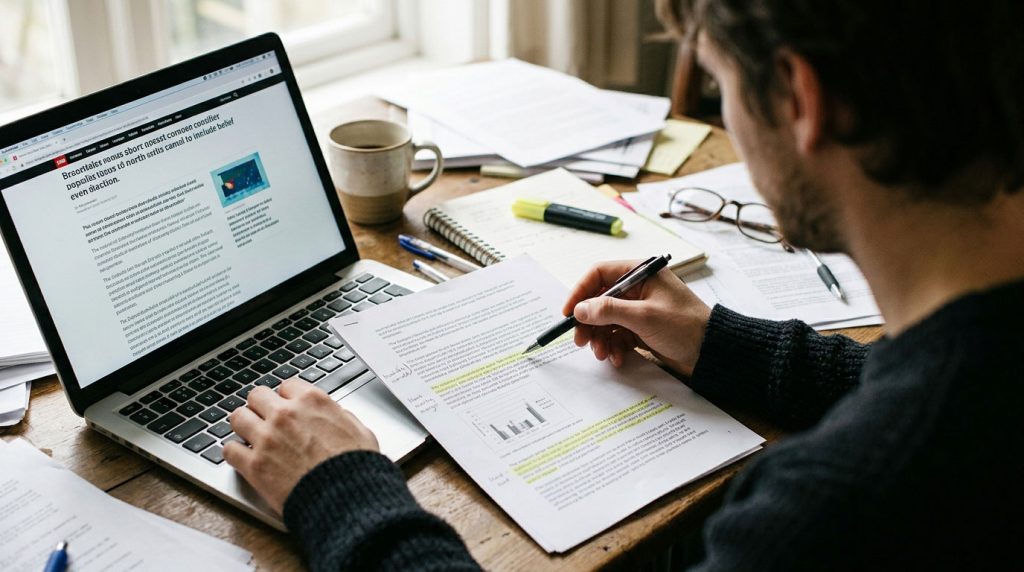
When an article mentions a study, report, speech, or public document, follow the link. Does that material support the actual claim? A source can be genuine while the summary overstates what it says. Read the relevant passage and the surrounding explanation rather than relying on a quoted fragment.
The Digital Inquiry Group’s Civic Online Reasoning framework centers on the source behind information, the evidence offered, and what other sources say. Apply those questions by checking who produced the material and looking beyond the publication’s own description of itself.
Separate Direct Knowledge From Repeated Claims
Ask how a quoted person knows what they are describing. Were they present? Did they examine the records? Are they interpreting someone else’s account? A relevant professional background can help, but it does not replace evidence for a particular statement.
Example: An Announcement Is Not an Evaluation
Imagine a company announces that its new scheduling tool saves users time. An article repeating that announcement establishes what the company claims. To evaluate the promised benefit, you would still need information about the test, participants, comparison method, and results. Several articles repeating the same announcement do not create several independent tests.
Look for the Context That Changes the Meaning
Ask what information would help you interpret the finding. Relevant context might include an earlier decision, a comparison period, the size of the affected group, or a limitation identified by the source. Context should clarify the claim, not distract from it.
Consider whose experiences are represented. A story about a service change might quote officials and customers but omit workers responsible for delivering it. That does not automatically invalidate the reporting. It identifies a perspective that could answer additional questions.
Also distinguish evidence from expectation. A projected outcome depends on assumptions; an observed outcome requires a defined measurement. Ask whether the article makes that difference clear before accepting its most confident sentence.
When an important detail is absent, write a precise follow-up question. Asking which years were compared or whether the full report is available is more productive than assuming either dishonesty or complete reliability.
Give Numbers a Clear Comparison
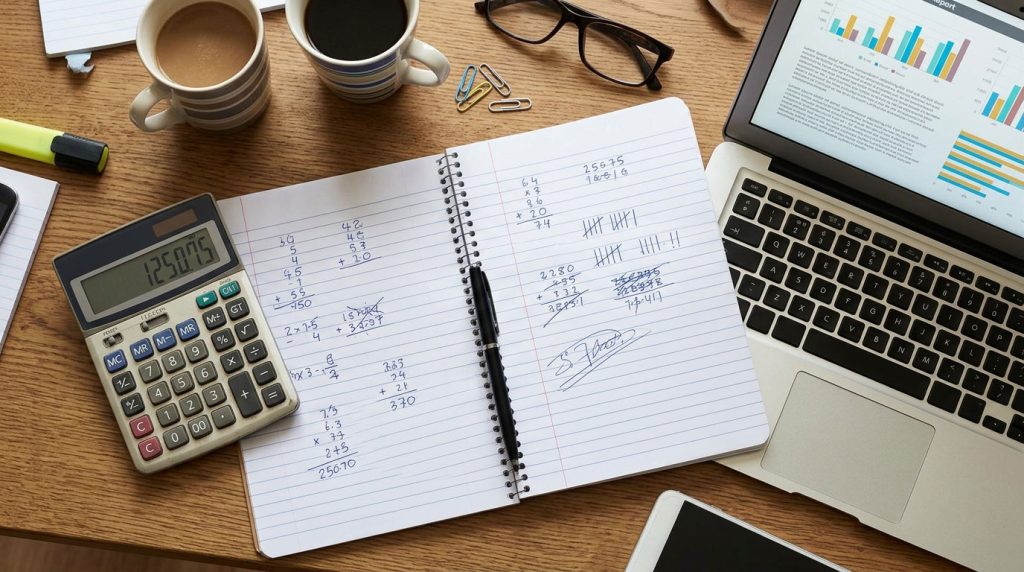
A percentage needs a starting point. A total needs a timeframe. A chart needs labels that tell you what was measured. When a number attracts your attention, ask for the underlying count, comparison group, and measurement method.
Read the Count Alongside the Percentage
For a hypothetical example, suppose recorded complaints rise from four to eight. That is a 100% increase, but it is also four additional complaints. Both descriptions are mathematically correct. Neither tells you, by itself, whether the service worsened, more people began using it, or the reporting process changed.
Check whether the article compares equivalent periods and populations. One neighborhood’s annual total should not be treated as directly comparable to a larger city’s monthly total. When the comparison is unclear, hold the conclusion open rather than filling the gap with an assumption.
Check Photographs and Screenshots Separately
An authentic photograph does not automatically confirm the caption attached to it. Examine the credited source, location, date, and whether the image is described as an illustration or archive photograph.
Where available, Google’s About this image feature can help identify earlier appearances and other uses of similar images. That can uncover missing context, but it does not guarantee a definitive origin or prove that an image is authentic. Treat the results as leads to examine.
A screenshot also needs its original setting. Find the underlying post or document where possible, and check the material immediately before and after the captured passage. Missing surroundings can change how a statement should be understood.
Finish With a Conclusion the Evidence Supports
Before sharing, summarize the article in your own words. Include the important qualification rather than reproducing the strongest wording in the headline. Ask yourself what is established, what remains uncertain, and what would justify changing your view.
The News Literacy Project’s breaking-news checklist recommends looking for evidence and allowing time for verification. During a developing story, waiting can be more responsible than offering a confident explanation too early.
Our guide to thoughtful reading offers another starting point for these habits. Read beyond a headline by checking the claim, following its source, and retaining its limits. You do not need an immediate opinion on every story. A clear question is often more useful than a premature answer.